The Celestine Prophecy Review for Practical Life Lessons
This post on The Celestine Prophecy draws on insights and cross-references to self-development practices such as Mindfulness and emotional intelligence in everyday situations. Summary takeaways are listed below.
At the Fork in the Road: What If There’s Another Way?
Life regularly brings us to a fork in the road—a difficult decision, a disappointing relationship, a missed opportunity, a career crossroads, or simply the feeling that despite doing everything we know to do, we’re not getting the results we want.
The problem is that we often keep choosing from the same familiar options. We analyze the situation using the beliefs, experiences, and assumptions we’ve always relied upon.
And if those approaches aren’t producing better outcomes, repeating them rarely changes the destination.
But what if there’s another way of looking at the problem?
- What if an unexpected coincidence could prompt you to look more closely?
- What if your intuition contains information you’ve been ignoring?
- What if recurring patterns in your relationships or circumstances are highlighting something you need to understand?
- And what if becoming more aware of these possibilities could help you make better choices moving forward?
These are some of the alternative concepts explored in James Redfield’s The Celestine Prophecy.
You don’t have to accept every idea in the book as fact. Instead, consider it a different lens for examining your life.
Sometimes a new perspective doesn’t give you all the answers—it simply helps you see questions, opportunities, and possibilities that you hadn’t considered before.
So, if you’re currently standing at your own fork in the road, perhaps the most useful question isn’t “Which path should I take?”
It may be: “What haven’t I considered yet?”
That’s where the practical lessons from The Celestine Prophecy become particularly interesting.
A Brief Introduction to The Celestine Prophecy Book
The Celestine Prophecy by James Redfield is often reviewed as a fictional spiritual adventure novel that follows a narrator searching for an ancient manuscript containing revelations about human consciousness and spiritual evolution. 1The Celestine Prophecy, Wikipedia Source
While the story is set largely in Peru, it combines mystery and adventure with ideas and lessons about coincidence, intuition, relationships, personal energy, and finding greater meaning and purpose in life.
The novel is written in an accessible, straightforward style and focuses more on communicating spiritual concepts than on character development.
The insights offer New Age ideas and instructional wisdom for personal development. The Celestine Prophecy presents a central invitation to pay closer attention to your life, your relationships, your intuition, and the seemingly unexpected events around you.
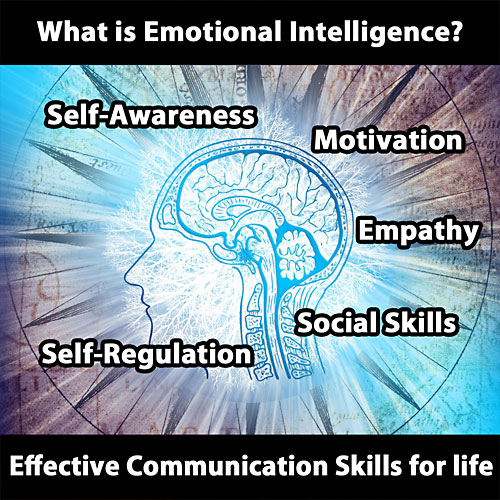
The book’s real value, then, isn’t whether you should accept every spiritual concept literally, but whether its ideas can encourage greater awareness and more intentional choices in everyday life, and encourage you to learn core life skills similar to alternative New Age mindset skills such as Emotional Intelligence, Mindfulness, the Law of Attraction, and Creative Visualization.

The Key Takeaway Lessons
1. Pay Attention to Coincidences
One central idea in The Celestine Prophecy is that coincidences may contain useful information or direction.
Rather than automatically dismissing an unexpected meeting, opportunity, conversation, or event as random, pause and ask:
“Why has this situation or event appeared in my life right now?”
This does not mean assuming that every coincidence has a supernatural explanation. Instead, it encourages awareness.
Practical applications of paying attention to coincidences
When something unexpected happens:
- Notice it.
- Consider what opportunity it may present.
- Ask whether it connects with something you’ve been thinking about.
- Look for a constructive action you could take.
- Avoid forcing a meaning where none exists.
Moving forward: Become more observant without becoming overly dependent on coincidence.
2. Trust Your Intuition—But Test It
The novel places considerable importance on intuition.
In everyday life, our intuition can be useful as our minds often recognize patterns before we consciously understand why something feels right or wrong.
However, intuition should complement rational thinking, not replace it.
The Practical applications of The Celestine Prophecy
When you have a strong intuitive feeling:
Pause → Listen → Investigate → Decide.
For important decisions, combine intuition with facts, experience, evidence, and consequences.
Moving forward: Don’t automatically ignore your instincts, but don’t mindlessly follow them either.
3. Become More Aware of Your Relationships
A major theme of the book is the way people interact emotionally and psychologically.
Some relationships leave you feeling encouraged, motivated, and confident. Others can leave you feeling exhausted, anxious, diminished, or constantly defensive.
The book describes these interactions in terms of “energy,” but you can also understand them psychologically.
You can apply observing energy flow in practical ways in personal situations.
After spending time with someone, ask:
- Do I feel better or worse?
- Do they respect my boundaries?
- Can we communicate honestly?
- Am I constantly seeking their approval?
- Am I trying to control them?
- Are they trying to control me?
- Does this relationship support healthy growth?
Moving forward: Invest more energy in relationships that are mutually supportive and reduce unnecessary involvement in destructive interpersonal patterns.
4. Stop Trying to Control Everything
The book suggests that people often try to control situations and other people because they feel uncertain or insecure.
Trying to control Everything, however, can create stress and conflict.
Practical application of considering control, influences, and decisions to change.
Separate your circumstances into three categories:
Control: Your actions, decisions, habits, preparation, attitude, and responses.
Influence: Other people’s decisions, relationships, negotiations, and circumstances you can affect but cannot determine.
Accept: Things you cannot change.
Put the majority of your effort into the first category.
Moving forward: Spend less energy fighting what you cannot control and more energy improving what you can.
5. Become More Present and Observant
The book encourages readers to notice what is happening rather than move through life automatically. This simple idea can have significant practical value.
Many opportunities are missed because people are distracted by the past, worried about the future, or simply following habitual routines.
Practical application of being present and observant
You can practice a new habit of becoming deliberately observant:
- Listen more carefully during conversations.
- Notice opportunities around you.
- Pay attention to recurring problems.
- Observe how people respond to you.
- Notice what consistently energizes or drains you.
- Become aware of your own emotional reactions.
Moving forward: Awareness creates better information, and better information generally produces better decisions.
6. Ask Better Questions
The narrator’s journey is driven by curiosity. Instead of accepting Everything as it appears, the book encourages you to question it. You can apply this strategy to almost every area of life.
Instead of: “Why is this happening to me?”
Try: “What can I learn from this?”
Instead of: “Why can’t I succeed?”
Ask: “What is preventing progress, and what can I change?”
Instead of: “What went wrong?”
Ask: “What can I do differently next time?”
Moving forward: Better questions can lead to better decisions, solutions, and outcomes.
7. Look for Patterns in Your Life
The Celestine Prophecy encourages readers to look beyond isolated events and consider recurring patterns.
This is especially useful for personal development. If the same problem keeps appearing, it may be worth investigating your role in the pattern.
Practical application of considering patterns in life
You can seek out or observe recurring patterns in your life that involve:
- Relationships
- Financial decisions
- Career choices
- Procrastination
- Confidence
- Communication
- Missed opportunities
- Stress
- Habits
Ask: “What keeps happening, and what might I be doing that contributes to it?”
Moving forward: Recognizing patterns lets you change the process rather than repeatedly dealing with the same result.
8. Take Responsibility for Your Own Growth
The book ultimately presents personal transformation as something that begins within the individual.
Waiting for circumstances, other people, or external events to change before improving your life can leave you stuck.
Practical application of taking responsibility
Identify one area where you want a better outcome and ask: “What is one thing within my control that I can improve today?”
It might be:
- Your health habits
- Your communication
- Your skills
- Your finances
- Your mindset
- Your environment
- Your relationships
- Your daily routine
Small improvements accumulate.
Moving forward: Focus less on waiting for the perfect circumstances and more on becoming better prepared for the opportunities that arise.
9. Protect Your Mental and Emotional Energy
Whether you interpret the book’s concept of “energy” spiritually or psychologically, the lesson is practical and valuable. Your attention is limited.
Where you repeatedly place your attention affects your thoughts, emotions, productivity, and behavior.
Practical applications of protecting your mental and emotional energy
Reduce unnecessary exposure to:
- Constant negativity
- Unproductive arguments
- Excessive complaining
- People who repeatedly undermine you
- Doom-scrolling
- Unnecessary drama
- Activities that consume time without providing value
You can redirect that attention toward the following key points:
- Learning
- Meaningful relationships
- Creativity
- Exercise
- Personal goals
- Nature
- Reflection
- Constructive action
Moving forward: Treat your attention as a valuable resource.
10. Look for Opportunities Instead of Only Problems
The Celestine Prophecy philosophy encourages a shift from passive observation to active awareness.
- An unexpected event may be an inconvenience—or it may reveal an opportunity.
- A rejection might reveal a better direction.
- A difficult conversation might expose a problem that needs addressing.
- A mistake might provide information that prevents a bigger mistake later.
When evaluating potential opportunities, consider their practical applications.
When something goes wrong, ask: “What opportunity is hidden inside this problem?”
This does not mean pretending that negative events are positive. It means looking for something useful to learn or do next.
Moving forward: Turn setbacks into information rather than allowing them to become permanent obstacles.
11. Develop a Stronger Sense of Purpose
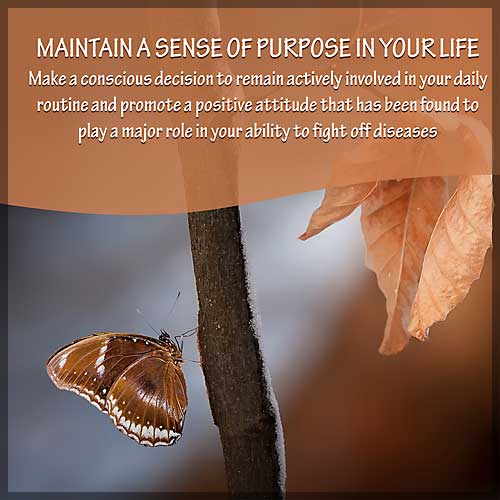
One of the book’s broader messages is that life can have greater meaning when we understand why we do what we do.
Without a sense of direction, it is easy to become trapped in routines that produce little satisfaction.
Practical application of establishing a sense of purpose
Regularly ask:
- What am I trying to accomplish?
- Why does it matter?
- What kind of person do I want to become?
- What do I want my life to contribute?
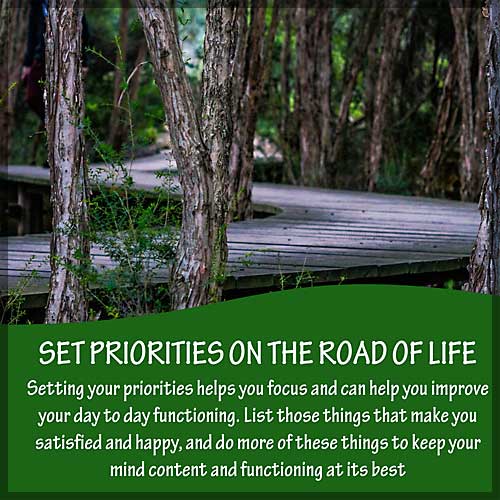
- Are my daily actions aligned with my priorities?
Then compare your answers with how you actually spend your time.
Moving forward: Make sure your priorities shape your calendar, not just your intentions.
12. Expect Possibilities, Not Guarantees
Perhaps one of the most useful ways to interpret the book is to replace passive expectation with constructive openness.
You don’t have to believe that the universe will automatically provide what you desire.
Instead, remain open to possibilities while taking practical action.
For example: Intention + Awareness + Action + Adaptability = Greater Opportunity
Set a direction, watch for opportunities, act when appropriate, and adjust when circumstances change.
Moving forward: Maintain optimism without abandoning realism.
A Practical Daily Philosophy
The ideas in The Celestine Prophecy can ultimately be reduced to a simple everyday practice:
Notice → Question → Reflect → Act → Learn
Notice what is happening around you.
Question what it might mean or what you can learn from it.
Reflect before reacting automatically.
Act on opportunities that genuinely align with your goals and values.
Learn from the results and adjust your approach.
Repeat the process.
The Bigger Lessons to Learn
The most useful message of The Celestine Prophecy doesn’t necessarily require accepting every spiritual claim in the novel. Its practical message can be interpreted much more simply:
Pay attention to your life.
- Pay attention to the people you meet.
- Pay attention to recurring patterns.
- Pay attention to your thoughts and emotional reactions.
- Pay attention to opportunities.
- Pay attention to your intuition.
- Pay attention to where you are putting your time and energy.
Then use that awareness to make better choices.
When considering your goals, don’t sit back and wait for life to magically deliver better circumstances.
It means becoming more conscious, observant, intentional, and responsive, increasing the likelihood that you recognize opportunities and make decisions that move you toward better outcomes.
Final Takeaway
The Celestine Prophecy 2James Redfield, The Celestine Prophecy: Available at Amazon can be viewed as a reminder to stop living entirely on autopilot. You cannot control every event, person, or outcome in your life.
But you can control how consciously you observe, interpret, respond, learn, and act. In your future events in life:
- Be more aware of what you observe in the flow of life.
- Trust your intuition—but verify it.
- Ask better questions.
- Learn from patterns.
- Protect your attention.
- Choose relationships wisely.
- Focus on what you can control.
- Stay open to unexpected opportunities.
- Take purposeful action.
- Learn from every outcome.
The practical lesson is ultimately about becoming a more conscious participant in your own life rather than simply reacting to whatever happens next.
References
- 1
- 2James Redfield, The Celestine Prophecy: Available at Amazon ↩︎